
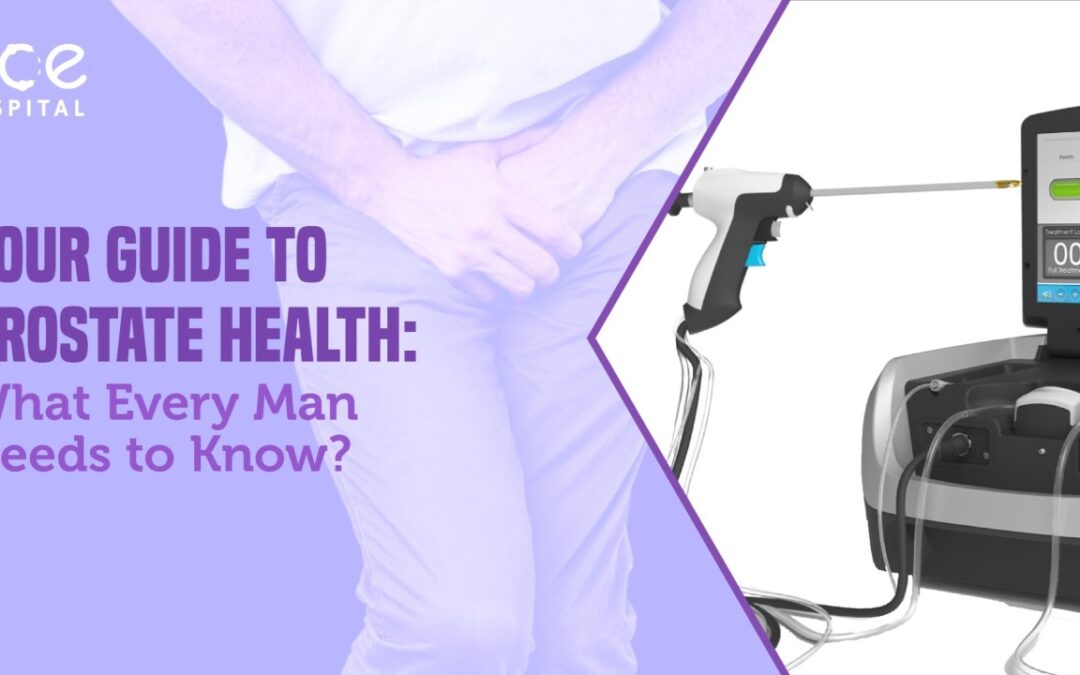
Prostate health is an essential yet often ignored part of men’s health. Many men are unaware of what the prostate actually does, what can go wrong, and when to seek medical help. Because symptoms are often subtle or considered “normal aging,” prostate-related conditions can go undiagnosed until they become serious.
This blog will take you through everything you need to know—from understanding the prostate’s function to identifying symptoms, causes, prevention strategies, and the latest treatments available. If you’re over 40, this might be the most important read for your health today.
WHAT IS THE PROSTATE?
Understanding the Gland
The prostate is a small, walnut-sized gland found only in men. It is located just below the bladder and surrounds the upper part of the urethra—the tube that carries urine and semen out of the body.
Its main role: To produce seminal fluid, which nourishes and protects sperm during ejaculation. This fluid mixes with sperm from the testicles and fluids from other glands to form semen.
Why It’s So Important
Even though it’s small, the prostate plays a big role in male reproductive and urinary health. If it swells or becomes infected, it can press against the urethra and bladder—causing a host of uncomfortable symptoms.
COMMON PROSTATE CONDITIONS
Benign Prostatic Hyperplasia (BPH)
- What is it? BPH is a non-cancerous enlargement of the prostate that happens as men age.
- How common is it? Nearly 50% of men in their 50s and 90% of men over 80 experience symptoms of BPH.
Prostatitis
- What is it? Inflammation of the prostate, often caused by bacterial infection.
- Types: Acute bacterial prostatitis Chronic bacterial prostatitis Chronic pelvic pain syndrome (non-bacterial)
Prostate Cancer
- What is it? A malignant tumor that grows in the prostate.
- How serious is it? It’s one of the most common cancers in men—but early detection makes it highly treatable.
SYMPTOMS OF PROSTATE ISSUES—AND WHY THEY OCCUR
Many men ignore or downplay these symptoms, thinking they’re simply part of getting older. But understanding the “why” behind each symptom can help in early diagnosis and treatment.
Frequent Urination
- Why it happens: An enlarged or inflamed prostate presses against the urethra and bladder. This reduces the bladder’s capacity or disrupts its signals, causing you to urinate more often—especially at night (nocturia).
Difficulty Starting Urination
- Why it happens: The prostate presses on the urethra, narrowing it. It becomes difficult for urine to flow smoothly when the opening is squeezed tight.
Weak or Interrupted Urine Stream
- Why it happens: The narrowed urethra causes weak flow. If the prostate swells unevenly, it can even block the urethra intermittently—causing a stop-start stream.
Incomplete Emptying of the Bladder
- Why it happens: The obstruction causes the bladder to contract harder and longer to push urine out, but often not all urine is expelled. This can also increase the risk of urinary tract infections (UTIs).
Pain or Burning During Urination
- Why it happens: Often linked to prostatitis (inflammation or infection). The inflamed tissue can irritate the urethra, causing pain, burning, or discomfort.
Blood in Urine or Semen
- Why it happens: Can be a sign of infection, inflammation, or—more rarely—prostate cancer. Swelling may rupture tiny blood vessels or affect nearby tissues.
Pain in the Pelvic Area, Lower Back, or Groin
- Why it happens: In chronic prostatitis or advanced prostate cancer, inflammation or tumor growth can spread pain to surrounding muscles and nerves.
Erectile Dysfunction or Reduced Sexual Drive
- Why it happens: The nerves and blood vessels around the prostate play a role in sexual function. Prostate issues or treatments (especially surgery or radiation) may interfere with erections and libido.
WHO IS AT RISK?
Certain factors increase your risk for prostate problems:
- Age: Risk increases significantly after age 50.
- Family History: If your father or brother had prostate cancer, your risk doubles.
- Diet: High fat, red meat, and dairy-heavy diets may increase risk.
- Obesity: Can lead to more aggressive forms of prostate cancer.
- Sedentary Lifestyle: Lack of movement can worsen inflammation and hormonal balance.
PREVENTING PROSTATE ISSUES
While some factors like age or genetics can’t be controlled, you can take these steps:
Diet for a Healthy Prostate
- Eat more: Tomatoes (lycopene), broccoli, green tea, flaxseeds, pumpkin seeds, salmon (omega-3s), soy.
- Avoid excessive: Red meat, processed food, sugar, full-fat dairy.
Stay Active
Exercise helps reduce inflammation, balance hormones, and boost immunity.
Manage Stress
Chronic stress affects hormone levels, which can indirectly impact prostate health. Try meditation, yoga, or deep breathing exercises.
Hydrate and Urinate
Don’t hold in urine for long periods, and drink enough water to flush toxins from the system.
Regular Screenings
Start annual screenings at age 45–50, or earlier if you’re high risk.
DIAGNOSIS & SCREENING
Digital Rectal Exam (DRE)
The doctor feels the size and texture of your prostate through the rectal wall.
PSA Test (Prostate-Specific Antigen)
A simple blood test that checks for elevated PSA levels—a possible sign of inflammation, BPH, or cancer.
Imaging
Ultrasound, MRI, or biopsy may be done if abnormalities are detected.
MODERN TREATMENTS FOR PROSTATE CONDITIONS
For BPH (Enlarged Prostate)
- Medications: Alpha-blockers (to relax the bladder neck) or 5-alpha reductase inhibitors (to shrink the prostate).
- Minimally Invasive Procedures: Rezūm Therapy – Steam is used to shrink excess prostate tissue. Laser Surgeries (TFL/HOLEP) – Safe, bloodless options.
- Surgery: Transurethral Resection of the Prostate (TURP) in severe cases.
For Prostatitis
- Antibiotics for bacterial cases
- Anti-inflammatory meds
- Pelvic floor therapy and lifestyle changes for chronic cases
For Prostate Cancer
- Early Stage: Active surveillance or targeted therapies
- Advanced: Radiation, chemotherapy, hormone therapy, or surgery (prostatectomy)
LIFE AFTER TREATMENT
Managing Side Effects
Some treatments, especially for cancer, may affect sexual function or urinary control. Rehabilitation and support groups help many regain confidence and quality of life.
Emotional Well-being
It’s okay to feel anxious or overwhelmed. Counseling or support groups can help process emotions and make informed decisions.
PROSTATE HEALTH IN INDIA—WHY IT MATTERS
In India, many men still avoid talking about urinary issues due to shame or lack of awareness. However, hospitals like Ace Hospital, Pune, are changing this mindset with advanced care, expert doctors like Dr. Suresh Patankar and Dr. Gadgil, and minimally invasive treatments like Rezūm and TFL surgeries.
FINAL THOUGHTS—WHEN TO SEE A DOCTOR
If you experience any of the following, it’s time to consult a urologist:
- Urinary discomfort or changes
- Pain during urination or ejaculation
- Blood in urine
- Reduced sexual function
- Pelvic or back pain
- Family history of prostate problems
Early diagnosis saves lives and often prevents surgery. Prostate issues are treatable—especially when you act in time.
NEED HELP? VISIT ACE HOSPITAL
Ace Hospital is one of Pune’s most trusted urology centers with cutting-edge diagnostic and surgical care. Our dedicated urologists offer personalized solutions for prostate, kidney, and bladder concerns.
Book a Consultation Today: Link in Bio! Erandwane, Pune