
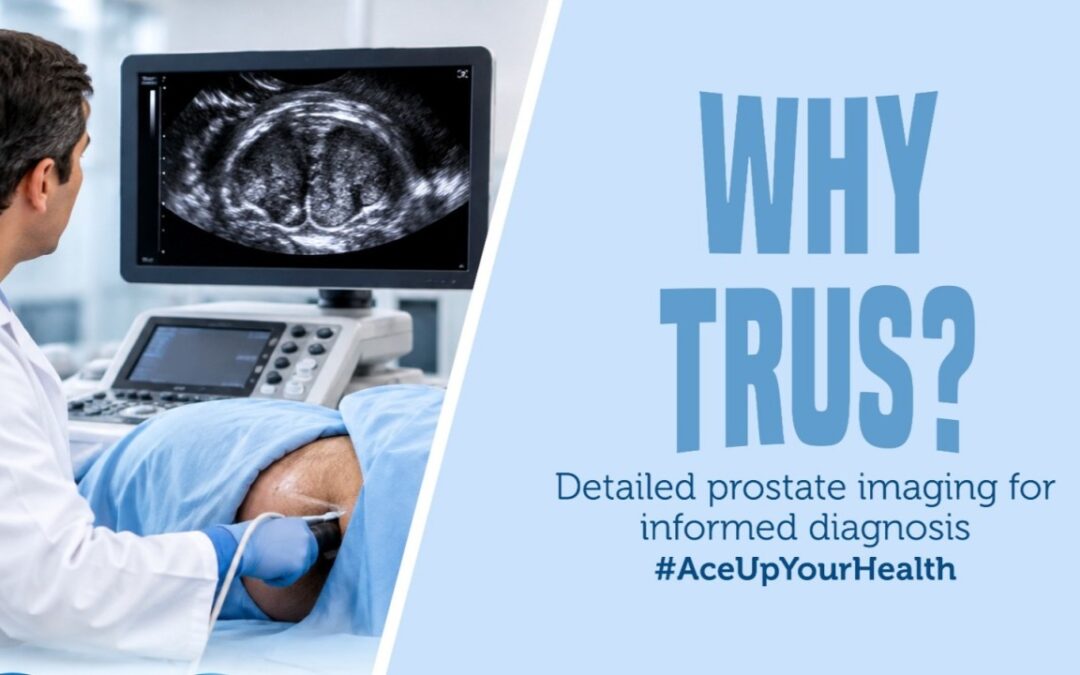
When it comes to prostate health, doctors may recommend different tests to understand the size, structure and condition of the prostate gland. One such investigation is Transrectal Ultrasound (TRUS), a specialised ultrasound examination that provides detailed images of the prostate.If your doctor has recommended a transrectal ultrasound, you may have questions about why it is needed, how the procedure is performed and whether it is uncomfortable.This guide explains what transrectal ultrasound is, why it is performed, how to prepare for the procedure and what you can expect during the examination.
What Is Transrectal Ultrasound?
Transrectal Ultrasound (TRUS) is an imaging test that uses high-frequency sound waves to create images of the prostate gland and surrounding tissues.Unlike a conventional ultrasound performed over the abdomen, TRUS uses a specially designed ultrasound probe that is gently inserted into the rectum. Since the prostate is located just in front of the rectum, this approach allows the ultrasound probe to obtain detailed images of the prostate.TRUS is commonly recommended as part of the evaluation of prostate-related conditions. It may also be used to measure the size of the prostate or to guide procedures such as a prostate biopsy.It is important to understand that TRUS itself is a diagnostic procedure, not a treatment. Your urologist will determine whether you need a TRUS based on your symptoms, examination findings, PSA results and overall prostate health.
Why Is a Transrectal Ultrasound Done? Your urologist may recommend a transrectal ultrasound for several reasons.
1. To Examine an Enlarged Prostate
An enlarged prostate, also known as benign prostatic hyperplasia (BPH), can cause urinary symptoms such as difficulty starting urination, weak urine flow, frequent urination or a feeling that the bladder has not emptied completely. TRUS can help doctors assess the size and structure of the prostate, which may be useful when planning further management or treatment.
2. To Investigate Abnormal Prostate Findings
If a doctor identifies an abnormality during a prostate examination, ultrasound imaging may help provide additional information about the prostate.TRUS can also be recommended when there are other findings that require further evaluation.
3. To Evaluate an Elevated PSA Level
The prostate-specific antigen (PSA) test is a blood test used as part of prostate evaluation. An elevated PSA does not automatically mean that a person has prostate cancer. PSA levels can also increase due to conditions such as benign prostate enlargement or inflammation. Depending on the clinical situation, your doctor may recommend imaging and, if necessary, further testing.
4. To Help Diagnose Certain Prostate Conditions
TRUS provides real-time images of the prostate and can help doctors identify abnormalities that may require further investigation. However, ultrasound alone cannot confirm prostate cancer. If cancer is suspected, your urologist may recommend additional tests, including MRI and/or a biopsy depending on your individual situation.
5. To Guide a Prostate Biopsy
One of the important uses of TRUS is helping guide a prostate biopsy. During a TRUS-guided biopsy, the ultrasound probe helps the doctor visualise the prostate while small tissue samples are collected using a biopsy needle. These samples are then examined in a laboratory to determine whether cancer cells are present.A biopsy is currently the test used to confirm a diagnosis of prostate cancer.
What Happens During a Transrectal Ultrasound?
Knowing what to expect can make the procedure feel less stressful.
Before the examination, you may be asked to change into a hospital gown or remove clothing from the waist down. You will generally lie on your side with your knees bent toward your chest. The ultrasound probe is covered with a protective sheath and lubricating gel. The doctor or trained imaging professional then gently inserts the probe a short distance into the rectum.The probe sends and receives sound waves to produce images of the prostate and surrounding structures. If a biopsy is also planned, the doctor may use the ultrasound images to guide the biopsy needle and collect tissue samples.The exact duration depends on whether you are having an ultrasound alone or an ultrasound-guided biopsy. A TRUS examination is generally a short procedure.
Is Transrectal Ultrasound Painful?
A common concern among patients is whether a transrectal ultrasound will hurt.A TRUS examination may cause mild pressure or temporary discomfort, particularly because the ultrasound probe is inserted into the rectum. Your healthcare team will take steps to make the examination as comfortable as possible. If a biopsy is being performed, local anaesthesia may be used to reduce discomfort. If you feel anxious or uncomfortable during the procedure, communicate this to your healthcare provider.
How Should You Prepare for a TRUS?
Preparation can vary depending on the reason for the examination and whether a biopsy is planned. For a routine prostate ultrasound, there may be little preparation required. Your doctor or imaging department will provide specific instructions based on your examination.
If you are undergoing a TRUS-guided prostate biopsy, preparation may include instructions regarding bowel preparation, medications and antibiotics. Patients taking blood-thinning medicines should specifically inform their doctor, as medication adjustments may sometimes be required before a biopsy. Never stop prescribed medication without medical advice.It is always best to follow the preparation instructions provided by your urologist or hospital.
What Happens After the Procedure?
If you have undergone a TRUS examination without a biopsy, you can generally return to your normal routine according to your doctor’s advice.
If a biopsy was performed, you may experience temporary discomfort or notice small amounts of blood in the urine, semen or rectum. Your doctor will explain what is expected and when you should seek medical attention.
After a biopsy, contact your healthcare provider promptly if you develop symptoms such as significant bleeding, high fever, difficulty passing urine or other concerning symptoms.
What Are the Benefits of Transrectal Ultrasound?
TRUS has several advantages when evaluating prostate health:
• Detailed prostate imaging: The probe is positioned close to the prostate, allowing detailed images.
• No ionising radiation: Ultrasound uses sound waves rather than X-rays.
• Real-time imaging: Doctors can view the prostate during the examination.
• Helps measure prostate size: This can be useful when evaluating prostate enlargement.
• Can guide biopsy procedures: TRUS can help doctors accurately guide tissue sampling when a biopsy is required.
Is TRUS Used Only for Prostate Cancer?
No.
Although TRUS may be used when prostate cancer is suspected, having a transrectal ultrasound does not mean that you have prostate cancer.Doctors may recommend TRUS for several reasons, including assessing prostate size, investigating urinary symptoms, evaluating abnormalities or guiding a biopsy. An elevated PSA level can also have causes other than cancer, including benign prostate enlargement and inflammation.Your urologist will interpret the TRUS findings together with your symptoms, physical examination, PSA results and other relevant investigations.
TRUS vs. Transabdominal Ultrasound: What Is the Difference?
Both examinations use ultrasound technology, but the approach is different. A transabdominal ultrasound uses a probe placed over the abdomen, while a transrectal ultrasound uses a probe inserted into the rectum to obtain closer images of the prostate. Because the prostate is located immediately in front of the rectum, TRUS can provide more detailed prostate imaging than an abdominal approach in certain situations.
Your doctor will recommend the appropriate imaging method based on your symptoms and the information they need.
Is Transrectal Ultrasound Safe?
Diagnostic ultrasound is generally considered a safe imaging technique and does not use ionising radiation.The experience and potential risks can differ when TRUS is combined with a biopsy because tissue is being sampled. Your doctor will discuss the benefits, preparation and potential risks before a biopsy. It is also important to understand that the choice between a transrectal and transperineal biopsy depends on several factors, including the patient’s condition, the suspected location of an abnormality and the urologist’s clinical approach.
When Should You Consult a Urologist?
You should consider discussing your symptoms with a urologist if you experience persistent urinary problems such as:
• Difficulty starting urination
• Weak or interrupted urine flow
• Frequent urination
• Increased nighttime urination
• A feeling of incomplete bladder emptying
• Blood in the urine
• Persistent pelvic discomfort
• An abnormal PSA result
These symptoms can have several causes and do not necessarily indicate cancer. A urologist can evaluate your symptoms and recommend appropriate tests. Frequently Asked Questions About Transrectal Ultrasound
1. What is a transrectal ultrasound used for?
A transrectal ultrasound is primarily used to examine the prostate. It can help assess prostate size and abnormalities and can also be used to guide a prostate biopsy when required.
2. Is TRUS the same as a prostate biopsy?
No. TRUS is an ultrasound imaging procedure. A prostate biopsy involves removing small tissue samples from the prostate for laboratory examination. TRUS can be used to guide the biopsy needle during the procedure.
3. Does TRUS diagnose prostate cancer?
TRUS can identify prostate abnormalities and help guide further investigation, but ultrasound alone cannot confirm prostate cancer. A biopsy is used to confirm the diagnosis when clinically indicated.
4. How long does a transrectal ultrasound take?
A routine TRUS examination is generally a short procedure. The total time can vary depending on whether additional procedures, such as a biopsy, are performed.
5. Is transrectal ultrasound painful?
Most patients may experience some pressure or mild discomfort during probe insertion. If a biopsy is performed, local anaesthesia may be used to reduce discomfort.
6. Does TRUS use radiation?
No. Ultrasound uses high-frequency sound waves and does not use ionising radiation.
7. Can TRUS detect an enlarged prostate?
Yes. TRUS can help doctors measure and assess the size and structure of the prostate, which can be useful when evaluating benign prostate enlargement.
8. What happens if the TRUS shows an abnormality?
Your doctor will interpret the findings along with your symptoms, examination and other test results. Depending on the findings, they may recommend additional investigations such as PSA testing, MRI or a biopsy.
Get Expert Urological Care at Ace Hospital, Pune Prostate-related symptoms should not be ignored, especially when they are persistent or associated with an abnormal PSA result.
At Ace Hospital, Pune, patients can consult experienced urology specialists for evaluation of prostate and urinary conditions. If your doctor recommends a Transrectal Ultrasound (TRUS), understanding the purpose of the test can help you approach the procedure with greater confidence.Do not self-diagnose based on urinary symptoms or PSA levels. Consult a qualified urologist for an appropriate evaluation and personalised medical advice.Looking for urology care in Pune? Schedule a consultation at Ace Hospital and take the right step towards better prostate health.
#AceHospital #Trus #Ultrasound #ProstateHealth #HealthAwareness