
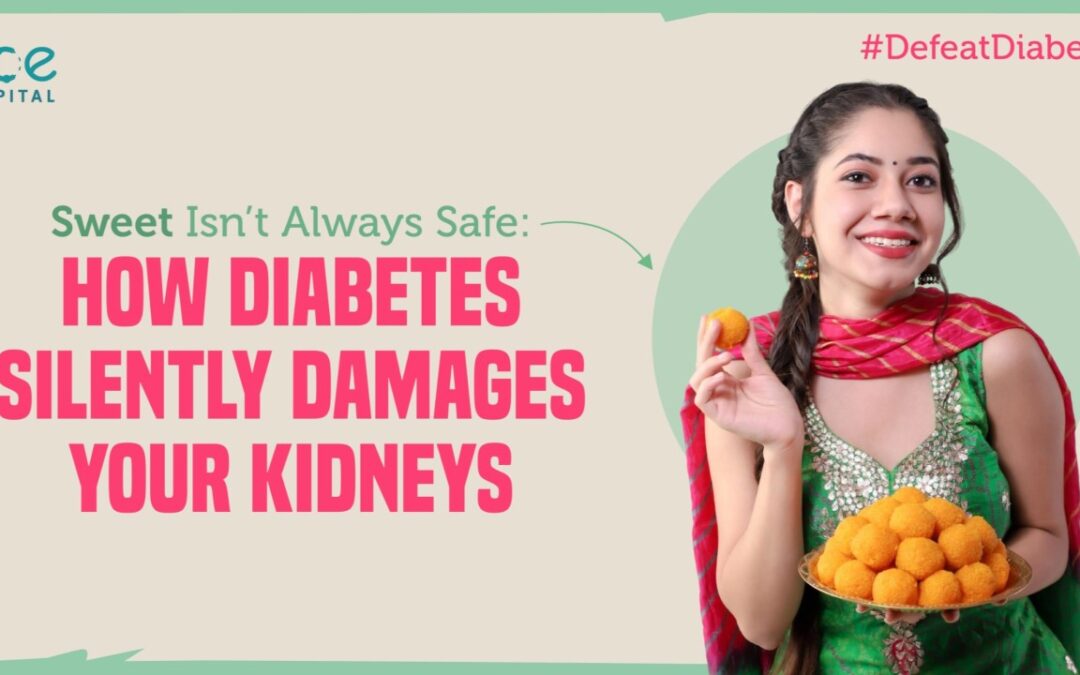
Introduction: When Sweet Turns Silent
In India, we love our sweets — from a comforting cup of chai with sugar to celebratory gulab jamuns. But behind this love for sweetness lies a growing health concern. Diabetes, often called the “silent epidemic,” affects more than 100 million Indians today — and what’s more worrying is that many don’t know how it quietly harms another vital organ: the kidneys.
At Ace Hospital, our specialists in Urology and Nephrology see this connection every day — where an uncontrolled blood sugar level slowly leads to kidney disease, often without any early warning signs.
🩺 Understanding the Link Between Diabetes and Kidney Health
Your kidneys act like your body’s natural filters — removing waste and extra fluids from the blood. When blood sugar remains high for long periods:
- It damages the tiny blood vessels (nephrons) in your kidneys.
- These vessels become weak and leaky, reducing the kidneys’ ability to clean the blood.
- Over time, this condition leads to Diabetic Nephropathy, one of the most common causes of chronic kidney disease (CKD).
It’s not just sugar that causes the problem. High blood pressure, obesity, and poor lifestyle choices increase the strain, worsening kidney damage even faster.
⚠️ The Silent Progression: Why You Might Not Notice It Early
Here’s the tricky part — kidney disease doesn’t cause pain or clear symptoms in its early stages. Most people feel perfectly fine until nearly 80% of their kidney function is lost.
Some early signs, if present, might include:
- Swelling around eyes, feet, or ankles
- Fatigue or reduced appetite
- Frequent urination at night
- Foamy urine
But these are often missed or mistaken for other minor issues — that’s why screening is critical.
🧪 Why Regular Screening Saves Lives
For every diabetic patient, routine kidney screening is not optional — it’s essential. Simple tests can detect early changes long before damage becomes permanent:
- Urine microalbumin test: Detects small amounts of protein leakage (early kidney damage sign)
- Blood creatinine & eGFR test: Measures how well kidneys are filtering
- Blood pressure monitoring: Keeps kidney strain under control
At Ace Hospital, our nephrology experts recommend annual screening for all diabetic patients, even if you feel healthy. Early detection allows timely treatment — lifestyle changes, medication adjustments, and sugar management can prevent the need for dialysis or transplant later.
🌱 Prevention Is Better Than Cure (and Cheaper Too)
Managing diabetes is about balance, not fear. Here’s what our doctors suggest for everyday kidney care:
- Control blood sugar – regular monitoring and medication compliance.
- Maintain healthy blood pressure – keep it below 130/80 mm Hg.
- Limit salt and processed foods – protect your blood vessels.
- Stay hydrated, but wisely – not too little, not too much.
- Avoid self-medication or overuse of painkillers (NSAIDs) – these can harm kidneys further.
- Get annual kidney function tests – even if you have “mild” diabetes.
Small steps today can prevent major complications tomorrow.
💬 A Message from Ace Hospital, Pune
On this World Diabetes Day, let’s remember: Diabetes doesn’t just affect blood sugar — it affects your entire system. But with the right care, awareness, and timely screening, you can live a long, healthy, and active life.
Our Urology and Nephrology departments at Ace Hospital are dedicated to helping patients manage diabetes-related kidney conditions with precision, empathy, and advanced care.
Because at Ace, we believe — “The earlier you detect, the better you protect.”
🩵 #WorldDiabetesDay #AceHospital #KidneyCare #DiabetesAwareness #Nephrology #Urology #HealthyLiving #PreventiveHealth #KidneyHealth #AceHospitalCares #PuneHealthcare #SweetIsNotAlwaysSafe