
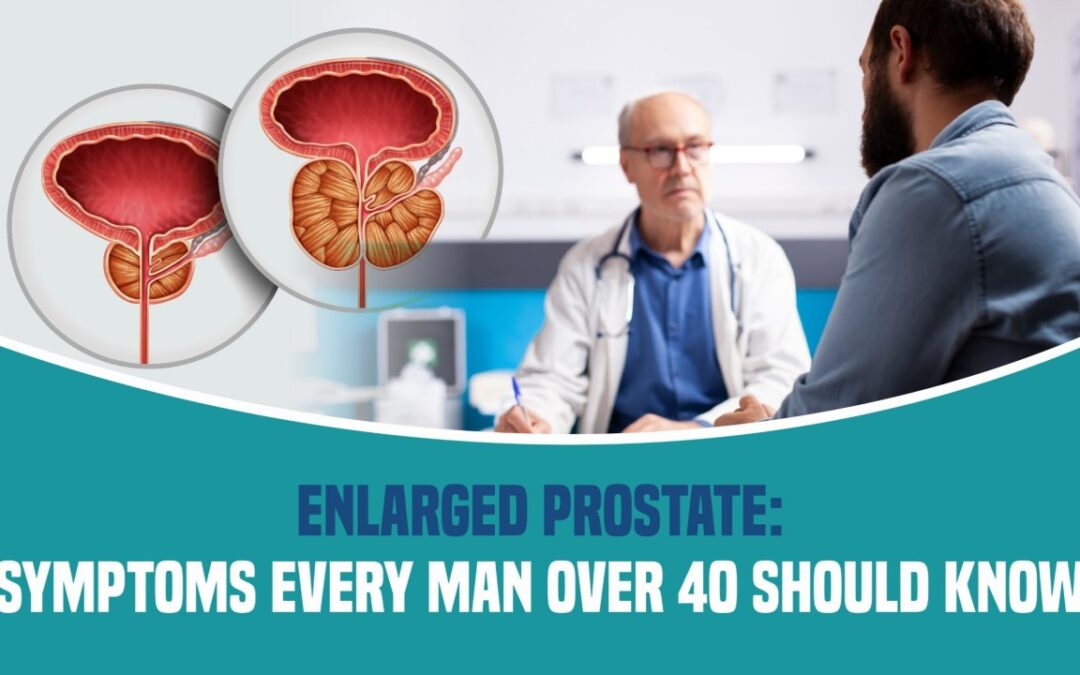
Many men notice changes in their urination as they get older—waking up multiple times at night, taking longer to empty the bladder, or feeling like the bladder is never completely empty. These symptoms are often brushed off as a normal part of ageing.While ageing does play a role, these changes are not something you should simply ignore. They could be signs of an enlarged prostate, also known as Benign Prostatic Hyperplasia (BPH).An enlarged prostate is one of the most common urological conditions affecting men over the age of 40. Although it is non-cancerous, it can significantly impact quality of life and, if left untreated, may lead to bladder damage, recurrent urinary tract infections (UTIs), bladder stones, or even kidney problems.The good news is that enlarged prostate is highly manageable when diagnosed early. Understanding the symptoms—and more importantly, why they happen—can help you seek timely treatment before complications arise.
What is the Prostate?
The prostate is a small, walnut-sized gland that is part of the male reproductive system. It is located just below the bladder and surrounds the urethra—the tube that carries urine from the bladder out of the body.Its primary role is to produce fluid that nourishes and protects sperm, making it an essential part of male fertility.Although small in size, the prostate has a major influence on urination because the urethra passes directly through its center.
What is an Enlarged Prostate (BPH)?
Benign Prostatic Hyperplasia (BPH) is a condition in which the prostate gland gradually increases in size as men age.Unlike prostate cancer, BPH is not cancerous and does not spread to other parts of the body. However, because the prostate surrounds the urethra, even a small increase in its size can put pressure on the urinary passage.Think of the urethra as a drinking straw running through the center of a sponge. If the sponge gradually expands, it begins to squeeze the straw, making it harder for fluid to pass through. This is exactly what happens when the prostate enlarges.As the urethra becomes compressed, the bladder has to work much harder to push urine out. Over time, the bladder muscles become thicker and less efficient, leading to many of the symptoms associated with BPH.
- Why Does the Prostate Enlarge?
The exact cause of BPH isn’t fully understood, but age-related hormonal changes are considered the primary reason.
As men grow older:
Testosterone levels gradually decline.
The balance between testosterone and estrogen changes.
Dihydrotestosterone (DHT), a hormone derived from testosterone, continues to stimulate prostate cell growth.
Over many years, this causes the prostate tissue to slowly enlarge.
Risk factors include:
- Age over 40 (risk increases significantly after 50)
- Family history of prostate enlargement
- Obesity
- Diabetes
- High blood pressure
- Sedentary lifestyle
- Heart disease
How Does an Enlarged Prostate Cause Symptoms?
One of the biggest misconceptions is that symptoms occur because the prostate itself hurts.
In reality, most symptoms are caused by pressure on the urethra and changes in bladder function.
As the prostate enlarges:
- It squeezes the urethra, narrowing the passage through which urine flows.
- The bladder has to contract more forcefully to push urine through the narrowed opening.
- Over time, the bladder muscle becomes thicker, irritated, and less efficient.
- Eventually, the bladder can no longer empty completely, leaving urine behind.
This chain of events explains why multiple urinary symptoms often appear together.
Symptoms Every Man Over 40 Should Know
1. Frequent Urination
One of the earliest and most common symptoms is needing to urinate more often than usual.
Why does it happen?
Since the bladder cannot empty completely, some urine remains behind after every visit to the washroom.
Because the bladder starts partially full, it fills up much faster than normal, making you feel the need to urinate again sooner.
What happens if it’s ignored?
Frequent urination can interfere with work, travel, sleep, and daily activities. Over time, chronic bladder irritation may worsen symptoms.
2. Waking Up Frequently at Night to Urinate (Nocturia)
Many men believe waking up two or three times every night is simply part of ageing.It isn’t.
Why does it happen?
The bladder becomes more sensitive due to constant strain. Even small amounts of urine trigger the urge to urinate, especially during the night when urine production naturally changes.
Why is this important?
Poor sleep caused by nocturia can lead to:
- Fatigue
- Poor concentration
- Increased risk of falls in older adults
- Reduced quality of life
3. Weak Urine Stream
Many men describe their urine stream as “slower than before.”
Why does it happen?
The enlarged prostate narrows the urethra, restricting urine flow.
Imagine trying to squeeze water through a partially pinched garden hose—the water still comes out, but much more slowly.
This is why men with BPH often notice reduced force while urinating.
4. Difficulty Starting Urination
You may stand at the toilet waiting several seconds—or even minutes—before urine begins to flow.
Why does it happen?
Because the urethra is compressed, the bladder has to build enough pressure to overcome the obstruction before urine can pass.
As the obstruction worsens, starting urination becomes increasingly difficult.
5. Feeling Like the Bladder Isn’t Empty
Many men finish urinating but immediately feel as though they still need to go.Why does it happen?
The bladder simply cannot empty completely due to the obstruction created by the enlarged prostate.Residual urine remains inside the bladder after every urination.
Why is this dangerous?
Residual urine creates the perfect environment for bacteria to grow, increasing the risk of:
- Recurrent UTIs
- Bladder stones
- Bladder damage
6. Dribbling After Urination
Some men notice urine leaking or dripping after they’ve finished urinating.
Why does it happen?
Since urine remains trapped inside the urethra and bladder, small amounts continue to leak out after standing up or moving.
Although this may seem like a minor inconvenience, it often indicates incomplete bladder emptying.
7. Sudden, Strong Urge to Urinate
Sometimes the urge becomes so intense that reaching the bathroom in time is difficult.
Why does it happen?
Years of pushing against a blocked urethra make the bladder muscle overactive.Eventually, it begins contracting unexpectedly—even when the bladder isn’t completely full.
This condition is called urge incontinence.
8. Straining While Urinating
If you find yourself pushing or forcing urine out, your bladder is working harder than it should.
Why does it happen?
The bladder has to generate greater pressure to overcome the narrowing caused by the enlarged prostate.Constant straining places additional stress on the bladder muscles.
9. Blood in the Urine
Although less common, some men with enlarged prostates notice blood in their urine.
Why does it happen?
As the prostate enlarges, tiny blood vessels become more fragile and may bleed.However, blood in urine should never be assumed to be caused only by BPH. It can also indicate kidney stones, infections, or urinary tract cancers and requires prompt medical evaluation.
10. Inability to Urinate (Acute Urinary Retention)
This is one of the most serious complications of an enlarged prostate.
What happens?
The prostate blocks the urethra so severely that urine cannot leave the bladder at all.
The bladder becomes painfully swollen and overfilled.This condition is a medical emergency requiring immediate treatment, often involving temporary catheterization to drain the bladder.
What Happens If an Enlarged Prostate Is Left Untreated?
Many men tolerate symptoms for years, believing they are “just getting older.”Unfortunately, untreated BPH can lead to serious complications, including:
Recurrent Urinary Tract Infections
Residual urine allows bacteria to multiply, increasing the likelihood of repeated infections.
Bladder Stones
Minerals present in stagnant urine may crystallize, forming bladder stones that cause pain, bleeding, and infections.
Bladder Damage
The bladder muscle thickens due to constant overwork.
Eventually, it weakens and loses its ability to contract effectively, making it even harder to empty the bladder.
Kidney Damage
If urine cannot drain properly, pressure may travel backward toward the kidneys.
Over time, this can impair kidney function and, in severe cases, lead to kidney failure.
How is an Enlarged Prostate Diagnosed?
Your urologist will evaluate your symptoms and recommend tests such as:
- Medical history and symptom assessment
- Digital Rectal Examination (DRE)
- Urine analysis
- Ultrasound of the prostate, bladder, and kidneys
- PSA (Prostate-Specific Antigen) blood test, when indicated
- Uroflowmetry (measures urine flow)
- Post-void residual urine measurement (checks how much urine remains after urination)
- Cystoscopy or other specialized tests in selected cases
These investigations help determine the severity of the enlargement and rule out other conditions with similar symptoms.
Treatment Options for Enlarged Prostate
Treatment depends on the severity of symptoms and how much they affect daily life.
Lifestyle Modifications
For mild symptoms:
- Reduce caffeine and alcohol intake
- Avoid drinking excessive fluids before bedtime
- Maintain a healthy weight
- Stay physically active
- Don’t delay urination when you feel the urge
Medications
Medications may:
- Relax the muscles around the prostate to improve urine flow.
- Gradually shrink the prostate by reducing hormonal stimulation.
Your urologist will determine which option is most suitable based on your condition.
Minimally Invasive Treatments
If medications are ineffective or symptoms become severe, minimally invasive procedures can remove or reduce the enlarged prostate while preserving surrounding tissues.
These advanced treatments typically involve:
- Smaller incisions or no external cuts
- Less bleeding
- Shorter hospital stays
- Faster recovery
- Improved urinary flow
Surgical Treatment
For significantly enlarged prostates or complications such as recurrent urinary retention, surgery may provide long-term relief by removing the obstructing prostate tissue.
Your urologist will recommend the most appropriate surgical approach based on your prostate size, overall health, and individual needs.
When Should You See a Urologist?
Don’t wait until symptoms become severe. Consult a urologist if you experience:
- Frequent urination
- Waking multiple times at night to urinate
- Weak urine stream
- Difficulty starting urination
- Feeling that your bladder never empties completely
- Blood in your urine
- Recurrent urinary tract infections
- Sudden inability to urinate
Early diagnosis often means simpler treatment, fewer complications, and better long-term bladder health.
Why Choose Ace Hospital, Pune?
At Ace Hospital, our experienced urologists specialize in diagnosing and treating enlarged prostate (BPH) using advanced diagnostic tools and evidence-based treatment options.
Whether you require lifestyle guidance, medication, minimally invasive procedures, or surgical intervention, our team provides personalized care focused on restoring normal urinary function and improving your quality of life.
With state-of-the-art technology, experienced specialists, and patient-centered care, Ace Hospital is committed to helping men maintain lifelong urological health.
Don’t Ignore the Signs
An enlarged prostate is one of the most common health conditions affecting men over 40—but it doesn’t have to control your life.
Symptoms such as frequent urination, weak urine flow, or waking up several times each night are not merely signs of ageing. They are your body’s way of telling you that something isn’t functioning as it should.
The earlier BPH is diagnosed, the easier it is to manage and the lower the risk of complications like bladder damage, kidney problems, or urinary retention.
If you’re experiencing any of these symptoms, schedule a consultation with the expert urologists at Ace Hospital, Pune. Early treatment can help you regain comfort, confidence, and a better quality of life.
#Healthcare #prostratehealth #acehospital #acewellness